Understanding how advanced force sensing, tactile feedback, and impedance control enable robots to manipulate delicate objects and collaborate safely with humans
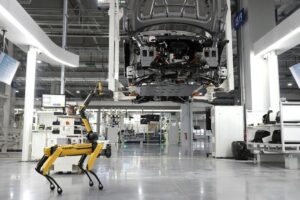
In a high-tech surgical suite at Johns Hopkins Hospital, a robotic arm performs microsurgery on a patient’s retina, manipulating tissue so delicate that excessive force measured in millinewtons could cause permanent blindness. Meanwhile, in a BMW assembly plant in Munich, collaborative robots work alongside human technicians, automatically adjusting their stiffness and compliance to ensure safety during physical contact while maintaining precise assembly operations. Both scenarios depend on the same fundamental capability: haptic feedback—the robot’s ability to sense, interpret, and respond to physical forces and tactile information.
Haptic feedback represents one of the most sophisticated sensory modalities in modern robotics, enabling machines to interact with the physical world through touch, force, and tactile sensation. Unlike vision or hearing, which provide information about distant objects, haptic sensing requires direct physical interaction, creating unique challenges and opportunities for robotic systems. The development of advanced haptic capabilities is transforming robotics from purely positional automation into intelligent systems capable of delicate manipulation, safe human collaboration, and adaptive interaction with unpredictable environments.
The Science of Robotic Touch
Haptic feedback encompasses multiple sensory modalities that work together to create a comprehensive sense of touch. Understanding these modalities is crucial for appreciating the complexity and potential of modern robotic haptic systems.
Force and Torque Sensing: The Foundation of Haptic Awareness
At the most fundamental level, haptic feedback begins with force and torque sensing—the robot’s ability to measure mechanical forces and moments acting on its end effector or joints. This capability requires sophisticated sensor technologies and signal processing algorithms that operate in real-time.
Six-Degree-of-Freedom Force Sensors: Modern industrial robots typically employ wrist-mounted force/torque sensors that measure three orthogonal forces (Fx, Fy, Fz) and three orthogonal torques (Tx, Ty, Tz). These sensors use strain gauges arranged in precise geometric configurations to detect minute mechanical deformations caused by applied forces.
The mathematical complexity lies in transforming these raw sensor measurements into meaningful force information in task-relevant coordinate systems. Force sensors measure forces in their own reference frame, but robots need force information in world coordinates, tool coordinates, or other task-specific frames. This requires continuous coordinate transformations that account for robot kinematics and sensor mounting configurations.
Joint-Level Force Sensing: Advanced robots incorporate force sensing directly into joints through techniques like Series Elastic Actuators (SEA) and Variable Impedance Actuators. These systems measure the deflection of compliant elements to infer applied forces, providing distributed force sensing throughout the robot’s kinematic chain.
Series Elastic Actuators place compliant elements (springs) between motors and robot links, then measure spring deflection to calculate applied forces. This approach provides several advantages: it enables precise force control, provides natural compliance for safe interaction, and offers energy storage capabilities for dynamic tasks.
Tactile Sensing: Distributed Touch Perception
While force/torque sensors provide information about overall interaction forces, tactile sensing provides spatially distributed touch information, enabling robots to understand contact geometry, surface properties, and local force distributions.
Resistive Tactile Arrays: These sensors use pressure-sensitive materials that change electrical resistance under applied force. Arrays of these sensors create “artificial skin” that can detect contact location, force magnitude, and even basic shape information. The challenge lies in processing hundreds or thousands of sensor readings in real-time while compensating for temperature effects, hysteresis, and sensor drift.
Capacitive Touch Sensing: Capacitive sensors detect changes in electrical capacitance caused by contact or proximity. These sensors can detect not only contact forces but also approaching objects before actual contact occurs, enabling predictive interaction strategies.
Vision-Based Tactile Sensing: Cutting-edge tactile sensors use miniature cameras to observe deformation of compliant surfaces during contact. These systems can provide extraordinarily detailed information about contact geometry, surface textures, and even material properties, but require sophisticated image processing algorithms operating at high frame rates.
Proprioception: Internal Force and Position Awareness
Robots must also sense forces and positions within their own mechanical structure—a capability analogous to human proprioception. This internal sensing enables robots to understand their own configuration, detect unexpected interactions, and maintain stable control even during complex manipulation tasks.
Motor Current Sensing: By monitoring electrical current consumed by robot motors, systems can infer applied torques and detect unexpected loads or collisions. This approach provides force sensing capabilities without additional sensors, but requires sophisticated models of motor characteristics and gear train dynamics.
Joint Deflection Measurement: High-precision robots often measure minute deflections in joints and links caused by applied loads. These measurements enable robots to compensate for structural compliance and maintain accuracy under varying force conditions.
Mathematical Frameworks for Force Control
Implementing effective haptic feedback requires sophisticated mathematical frameworks that enable robots to interpret sensor information and generate appropriate behavioral responses. These frameworks represent some of the most mathematically elegant solutions in robotics.
Impedance Control: Programming Robot Compliance
Impedance control represents a fundamental paradigm shift from traditional position control to interaction control. Instead of commanding specific positions, impedance control enables engineers to program how robots should “feel” during physical interaction—their stiffness, damping, and inertial characteristics.
Mathematical Formulation: The impedance control law establishes a desired relationship between forces and motions:
F = M(ẍ - ẍd) + B(ẋ - ẋd) + K(x - xd)Where F represents applied forces, M is desired inertia, B is desired damping, K is desired stiffness, and the subscript ‘d’ denotes desired values. This equation defines how the robot will respond to external forces—high stiffness creates rigid behavior, while low stiffness enables compliant interaction.
Adaptive Impedance: Advanced implementations adjust impedance parameters in real-time based on task requirements and environmental conditions. During free motion, robots can maintain high stiffness for precise positioning. Upon contact detection, they automatically reduce stiffness to enable compliant interaction.
Variable Stiffness Control: Some applications require different stiffness values in different directions. For example, during assembly tasks, robots might maintain high stiffness in directions that require precise positioning while allowing compliance in directions where forces should be accommodated.
Hybrid Force-Position Control
Many practical applications require simultaneous control of position and force in different directions—for example, maintaining constant downward force while following a path in the horizontal plane. Hybrid control frameworks address this challenge through sophisticated coordinate transformations and constraint analysis.
Constraint Analysis: The mathematical foundation begins with analyzing task constraints to determine which directions require position control and which require force control. This analysis uses concepts from rigid body mechanics and constraint theory to decompose task space into position-controlled and force-controlled subspaces.
Selection Matrices: Implementation uses selection matrices that mathematically separate position and force control directions:
S = diag[s1, s2, s3, s4, s5, s6]Where each element si equals 1 for force-controlled directions and 0 for position-controlled directions. This mathematical abstraction enables unified control algorithms that seamlessly blend position and force control.
Coordinate Frame Management: Effective hybrid control requires careful management of coordinate frames that align with natural task constraints. For surface following tasks, one axis might align with surface normal (force control) while others align with surface tangent directions (position control).
Admittance Control: Force-Based Motion Generation
While impedance control programs how robots respond to external forces, admittance control uses force measurements to generate desired motions. This approach is particularly valuable for applications requiring responsive interaction with human operators or delicate manipulation tasks.
Mathematical Structure: Admittance control implements the inverse of impedance relationships:
ẍd = M^-1[F - B(ẋ - ẋref) - K(x - xref)]This equation generates desired accelerations based on measured forces, creating motion responses that feel natural and intuitive to human operators.
Stability Considerations: Admittance control systems can become unstable due to time delays, sensor noise, and unmodeled dynamics. Ensuring stability requires careful analysis using passivity theory and robust control techniques.
Advanced Haptic Technologies
Multi-Modal Sensor Fusion
Modern haptic systems integrate multiple sensing modalities to create comprehensive tactile awareness that exceeds the capabilities of individual sensor types.
Sensor Fusion Algorithms: Kalman filtering and Bayesian estimation techniques combine information from force sensors, tactile arrays, and vision systems to create unified estimates of contact conditions. These algorithms must account for different sensor sampling rates, noise characteristics, and failure modes.
Cross-Modal Validation: Sophisticated systems use information from one sensing modality to validate and correct information from others. For example, vision can predict expected tactile sensations before contact occurs, enabling detection of sensor failures or unexpected contact conditions.
Temporal Integration: Haptic sensing often requires integration of information over time to build understanding of object properties and interaction dynamics. Moving fingers across surfaces reveals texture information that cannot be obtained from static contact, requiring algorithms that maintain and update tactile memory.
Distributed Haptic Networks
Advanced robotic systems distribute haptic sensing throughout their mechanical structure, creating comprehensive awareness of interaction forces and contact conditions.
Sensor Network Architecture: Distributed systems require robust communication protocols that can handle high-bandwidth sensor data while maintaining real-time performance. Network architectures must be fault-tolerant and scalable as sensor counts increase.
Distributed Processing: Rather than centralizing all haptic processing, advanced systems perform local processing at sensor nodes, reducing communication bandwidth and improving response times. Edge processing capabilities enable complex tactile processing algorithms to operate with minimal latency.
Hierarchical Control: Multi-level control architectures coordinate between local haptic responses and global task objectives. Low-level controllers handle immediate safety and compliance requirements while higher-level systems manage task planning and coordination.
Real-World Applications and Case Studies
Medical Robotics: Precision Through Touch
Medical applications represent some of the most demanding requirements for robotic haptic capabilities, where inappropriate forces can cause tissue damage or surgical complications.
Case Study – Robotic Microsurgery: The da Vinci Surgical System incorporates sophisticated haptic feedback to enable surgeons to perform delicate procedures through minimally invasive techniques. The system must amplify and transmit subtle force information from surgical instruments to surgeon controls while filtering out unwanted vibrations and disturbances.
The mathematical challenges are enormous: force scaling algorithms must maintain stability while amplifying forces by factors of 10-100, sensor fusion algorithms must combine information from multiple force sensors and vision systems, and safety monitoring systems must detect dangerous force conditions and automatically implement protective responses.
Implementation Results: Surgeons report that haptic feedback reduces tissue trauma by 40-60% compared to procedures without force feedback. The system enables procedures that would be impossible without tactile information, such as suturing blood vessels smaller than 1mm in diameter.
Force Scaling and Transparency: The system implements variable force scaling that adapts to surgical context—high amplification for delicate tissue manipulation and lower amplification for more robust procedures. Achieving “transparency” (making the robot feel invisible to the surgeon) requires sophisticated control algorithms that compensate for robot dynamics and sensor characteristics.
Manufacturing: Safe Human-Robot Collaboration
Collaborative robotics (cobots) rely heavily on haptic feedback to ensure safe interaction with human workers while maintaining productive operation.
Case Study – Automotive Assembly: BMW’s implementation of collaborative robots in final assembly operations demonstrates sophisticated haptic feedback applications. Robots must detect human contact within milliseconds and respond appropriately—stopping dangerous motions while allowing intentional collaboration.
Safety Implementation: The system uses multiple layers of haptic monitoring: joint torque sensors detect unexpected loads, skin-like tactile sensors provide distributed contact detection, and vision systems predict potential contact before it occurs. Machine learning algorithms distinguish between intentional collaboration and accidental contact.
Variable Compliance Control: During collaborative tasks, robots automatically adjust their mechanical impedance based on proximity to human workers. In shared workspaces, robots become highly compliant and responsive to human touch. In automated sections, they maintain high stiffness for precise assembly operations.
Performance Metrics: The implementation achieves human-robot collaboration with zero safety incidents over 18 months of operation while maintaining assembly cycle times within 5% of fully automated operation.
Service Robotics: Gentle Household Assistance
Domestic and service robots require haptic capabilities to interact safely and effectively with delicate household objects and varying human preferences.
Case Study – Elderly Care Assistance: Toyota’s Human Support Robot (HSR) uses comprehensive haptic feedback to assist elderly individuals with daily activities. The robot must manipulate fragile objects like medication bottles and food items while providing physical assistance that adapts to individual user needs.
Adaptive Interaction: The system learns individual user preferences for assistance levels, automatically adjusting force levels and compliance based on user feedback and observed responses. Machine learning algorithms continuously refine haptic parameters based on successful interactions.
Object Recognition Through Touch: Advanced tactile processing enables the robot to identify objects through manipulation—distinguishing between medications, food items, and personal objects based on tactile signatures including weight, compliance, texture, and thermal properties.
Safety and Trust: Extensive user studies demonstrate that appropriate haptic feedback is crucial for user acceptance and trust. Users report significantly higher comfort levels with robots that respond appropriately to touch compared to robots with purely visual or auditory interfaces.
Technical Challenges and Solutions
Sensor Integration and Calibration
Haptic systems require precise calibration and integration of multiple sensor types, each with different characteristics, sampling rates, and failure modes.
Multi-Rate Sensor Fusion: Force sensors might operate at 1000 Hz while tactile arrays operate at 100 Hz and vision systems at 30 Hz. Fusion algorithms must combine information from these different temporal scales while maintaining real-time performance.
Cross-Calibration: Different sensor types measuring the same physical phenomena (force) must be cross-calibrated to ensure consistency. This requires sophisticated calibration procedures using reference standards and mathematical models of sensor characteristics.
Drift Compensation: Long-term sensor drift can degrade haptic performance over time. Advanced systems implement automatic drift compensation using reference measurements, environmental sensors, and statistical analysis of sensor behavior patterns.
Real-Time Processing Requirements
Haptic feedback requires extremely fast response times—typically 1000 Hz or higher—to maintain stability and provide natural feel during interaction.
Hardware Acceleration: Modern haptic systems use specialized hardware including real-time operating systems, dedicated signal processing units, and high-speed communication interfaces to meet timing requirements.
Algorithm Optimization: Haptic control algorithms must be optimized for real-time performance without sacrificing functionality. This requires careful algorithm design, efficient numerical methods, and specialized software architectures.
Predictive Processing: Some systems use predictive algorithms that anticipate future haptic requirements based on current trajectories and interaction patterns, enabling pre-computation of complex algorithms before they’re needed.
Safety and Fault Tolerance
Haptic systems that interact with humans or handle delicate objects require comprehensive safety systems and fault tolerance.
Redundant Sensing: Critical applications use multiple independent sensors for the same measurements, enabling detection of sensor failures and continued operation with degraded but safe performance.
Graceful Degradation: When sensors fail or algorithms detect potentially unsafe conditions, systems must gracefully degrade to safe operation modes rather than shutting down completely.
Emergency Response: Rapid detection of dangerous conditions (excessive forces, unstable control, sensor failures) triggers immediate protective responses including emergency stops, compliance mode activation, or handoff to backup systems.
Economic Impact and Market Dynamics
Cost-Benefit Analysis
Haptic feedback systems require significant investment in sensors, processing hardware, and algorithm development, but provide substantial returns through improved performance and capabilities.
Performance Improvements: Organizations implementing advanced haptic feedback report 25-50% improvements in delicate manipulation tasks, 40-70% reductions in product damage during handling, and 30-60% improvements in human-robot collaboration efficiency.
Quality Enhancement: Haptic feedback enables robots to detect and respond to quality variations that would be missed by vision-only systems. This capability reduces defect rates and enables more sophisticated quality control processes.
Labor Productivity: In collaborative applications, haptic feedback enables more natural human-robot interaction, reducing training requirements and enabling more efficient task sharing between humans and robots.
Market Development Trends
The haptic robotics market is experiencing rapid growth driven by expanding applications and improving technology capabilities.
Cost Reduction: Advances in sensor technology and manufacturing processes are reducing the cost of haptic systems by 15-20% annually while improving performance. This cost reduction is expanding the range of economically viable applications.
Standardization: Industry standards for haptic interfaces, safety requirements, and performance metrics are enabling broader adoption and reducing integration costs for end users.
Integration Platforms: Software platforms and development tools are simplifying the implementation of haptic feedback systems, reducing development time and enabling more organizations to leverage these technologies.
Future Developments and Research Frontiers
Artificial Tactile Intelligence
The next generation of haptic systems will incorporate artificial intelligence to automatically interpret tactile information and adapt interaction strategies.
Tactile Pattern Recognition: Machine learning algorithms that can recognize objects, materials, and surface properties through touch alone, enabling robots to identify and manipulate objects in dark or visually occluded environments.
Adaptive Haptic Interfaces: AI systems that learn individual user preferences and automatically adjust haptic feedback characteristics to provide personalized interaction experiences.
Predictive Touch: Systems that use machine learning to predict optimal interaction strategies based on visual and tactile information, enabling more efficient and effective manipulation strategies.
Bio-Inspired Haptic Systems
Research into biological tactile systems is inspiring new approaches to robotic haptic sensing and processing.
Neuromorphic Tactile Processing: Sensor and processing systems inspired by biological neural networks, offering improved efficiency and processing capabilities for complex tactile information.
Multi-Modal Integration: Bio-inspired approaches to combining tactile, visual, and auditory information that mirror the sophisticated sensor fusion capabilities of biological systems.
Adaptive Sensing: Tactile systems that automatically adjust sensitivity and processing characteristics based on task requirements, similar to how biological systems adapt to different tactile environments.
Quantum-Enhanced Sensing
Emerging quantum technologies may revolutionize haptic sensing capabilities through unprecedented sensitivity and precision.
Quantum Force Sensors: Quantum mechanical effects could enable force sensors with sensitivity orders of magnitude better than current technologies, enabling detection of molecular-level interaction forces.
Quantum-Enhanced Processing: Quantum computing algorithms for processing complex tactile information and optimizing haptic control strategies in real-time.
Implementation Guidelines
System Architecture Design
Successful haptic feedback implementation requires careful attention to system architecture from the earliest design stages.
Sensor Selection Strategy: Choosing appropriate sensor types and configurations based on application requirements, performance specifications, and cost constraints. The selection process must consider sensor resolution, bandwidth, noise characteristics, and integration requirements.
Processing Architecture: Designing processing systems that can handle high-bandwidth sensor data while meeting real-time performance requirements. Architecture decisions affect system cost, performance, and expandability.
Safety System Integration: Incorporating comprehensive safety monitoring and response systems that operate independently of primary haptic control algorithms to ensure safe operation even during system failures.
Development and Validation Methodology
Haptic systems require specialized development approaches that account for the complexity of force and tactile interaction.
Simulation and Modeling: Comprehensive simulation environments that accurately model sensor characteristics, contact dynamics, and human interaction patterns. These simulations enable algorithm development and testing before hardware implementation.
Human Factors Testing: Extensive user testing to validate haptic feedback quality, safety, and usability across diverse user populations and operating conditions.
Performance Validation: Systematic testing procedures that validate haptic system performance across the full range of expected operating conditions, including sensor failures, environmental variations, and edge cases.
The Touch Revolution
Haptic feedback represents a transformative technology that is fundamentally changing the relationship between robots and their physical environment. By developing sophisticated abilities to sense, interpret, and respond to touch, force, and tactile information, robots are evolving from rigid automation systems into adaptive, responsive partners capable of delicate manipulation and safe collaboration.
The mathematical elegance of haptic control theory—from impedance control and hybrid force-position control to advanced sensor fusion algorithms—provides both theoretical foundations and practical tools for implementing these capabilities. The complexity is substantial, but the benefits are revolutionary: robots that can perform microsurgery, collaborate safely with humans, and manipulate delicate objects with unprecedented precision and adaptability.
The economic impact is already substantial and growing rapidly. Organizations implementing advanced haptic feedback report dramatic improvements in precision, safety, and efficiency that justify the investment in sophisticated sensor and control technologies. More importantly, haptic feedback enables entirely new classes of applications that were previously impossible with conventional robotic systems.
As research continues into bio-inspired tactile systems, artificial tactile intelligence, and quantum-enhanced sensing, we can expect haptic capabilities to become even more sophisticated and accessible. The organizations that master these technologies today will be best positioned to leverage the next generation of touch-enabled robotic systems.
The future of robotics is not just about what robots can see or how fast they can move—it’s about how intelligently and safely they can interact with the physical world through the sense of touch. For engineers and organizations ready to embrace this complexity, haptic feedback offers a pathway to robotic capabilities that bring machines closer to the sophistication and adaptability of biological systems.
In a world where robots increasingly work alongside humans and handle delicate, valuable, or dangerous materials, the ability to touch, feel, and respond appropriately is not just an advantage—it’s becoming essential. The touch revolution in robotics has begun, and its impact will reshape how we think about the relationship between intelligent machines and the physical world.
About The Author