

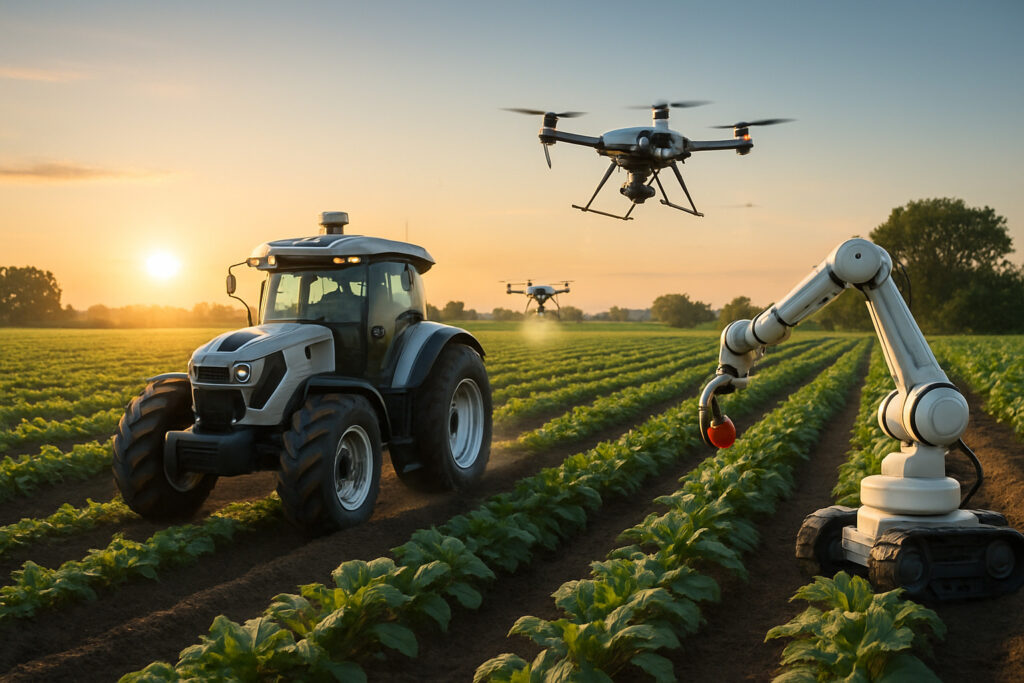
Agriculture is in the midst of a quiet revolution. Fields that once relied solely on human hands are now home to machines that see, decide, and act with remarkable precision. Agricultural robotics is no longer a niche—it’s fast becoming the backbone of how we grow food in an era of labor shortages, rising demand, and climate pressure.
Robots in the Field Today
Crop Monitoring: Drones and autonomous ground vehicles equipped with multispectral cameras track plant health in real time. They detect nutrient deficiencies, pest outbreaks, or water stress long before the human eye can. For example, startups like PEAT and Blue River Technology (owned by John Deere) offer AI-driven systems that scan leaves and soil, providing actionable insights at scale.Precision Spraying: Instead of blanketing entire fields with chemicals, robots now deliver treatments directly to affected plants. John Deere’s See & Spray™ technology uses computer vision to distinguish crops from weeds, cutting herbicide use by up to 90%. This not only lowers costs but also answers sustainability mandates from regulators and consumers.Automated Harvesting: Labor-intensive crops like strawberries, apples, and tomatoes are seeing breakthroughs with robots capable of delicately picking ripe produce. Companies like Agrobot and FFRobotics deploy robotic arms that match human dexterity while working around the clock.
The Business Case for Robotics in Agriculture
Efficiency Gains: Robots reduce waste by applying water, fertilizer, and chemicals only where needed. They can also work continuously, independent of time or weather constraints.Labor Shortages: Farmers worldwide struggle to recruit and retain seasonal workers. Robotics offers a reliable, scalable substitute that stabilizes operations.Sustainability Benefits: Precision farming reduces chemical use, improves soil health, and boosts yields—key factors for meeting ESG targets and regulatory compliance.
Challenges on the Ground
Environmental Variability: Unlike factory floors, farms are unpredictable. Rain, mud, and uneven terrain can disrupt sensors and mobility.Adoption Costs: Robotic harvesters can run into hundreds of thousands of dollars, making upfront investment a barrier for small and medium-sized farms.
Integration Complexity: Robotics must work seamlessly with existing tractors, irrigation systems, and supply chains.
Why It Matters for B2B Leaders
Agriculture is both capital-intensive and labor-constrained, making it fertile ground for robotics investment. ROI is measurable in reduced input costs, stabilized workforces, and higher yields. For agribusiness suppliers, robotics presents an opportunity to lock in long-term relationships with farmers by offering both hardware and data-driven service models.
Bottom line: Agricultural robotics isn’t a futuristic vision—it’s a present-day business case with global implications.
About The Author